
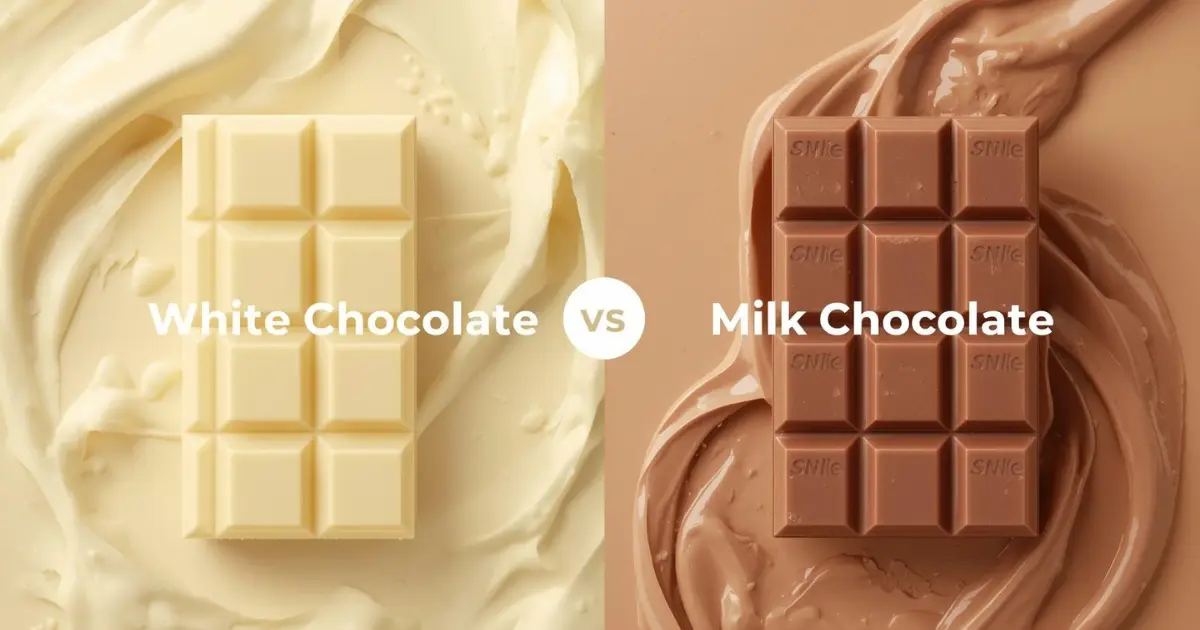
How Is White Chocolate Different from Milk Chocolate?
Have you ever taken a bite of silky, sweet white chocolate and wondered why it tastes so different from the creamy comfort of milk chocolate? You’re not alone. For chocolate lovers everywhere, the debate between white chocolate vs milk chocolate is a timeless one — each has its loyal fans and distinct flavor charm.
In this article, we’ll explore everything you need to know about white chocolate — what it’s made of, how it differs from milk chocolate, and how to use each type in your favorite desserts. Whether you’re a baker, a chocolate connoisseur, or simply curious, this guide will help you understand the delicious science behind the sweetness.
Table of Contents
What Exactly Is White Chocolate?
The Basic Composition of White Chocolate
Despite its name, white chocolate isn’t technically “chocolate” in the traditional sense. Why? Because it doesn’t contain cocoa solids — the part of the cocoa bean that gives chocolate its deep color and rich flavor.
Instead, white chocolate is made from:
- Cocoa butter (the natural fat extracted from cocoa beans)
- Milk solids or milk powder
- Sugar
- Vanilla (optional for flavor)
According to U.S. FDA standards, white chocolate must contain at least:
- 20% cocoa butter
- 14% total milk solids
- 3.5% milk fat
These ingredients give white chocolate its pale ivory color, buttery texture, and smooth melt-in-your-mouth sweetness.
The Flavor Profile of White Chocolate
White chocolate is known for its creamy, buttery taste and hints of vanilla. It’s milder than milk or dark chocolate because it lacks the bitter compounds found in cocoa solids. Some people describe it as tasting like sweet cream with a whisper of cocoa — indulgent and smooth, but not overpowering.
What Is Milk Chocolate Made Of?
The Ingredients Behind the Classic Taste
Milk chocolate bridges the gap between the bitterness of dark chocolate and the sweetness of white chocolate. It’s made from:
- Cocoa solids (the key ingredient that gives it flavor and color)
- Cocoa butter
- Milk powder or condensed milk
- Sugar
- Optional vanilla and emulsifiers for texture
This combination creates a smooth, rich, and creamy chocolate that’s less intense than dark chocolate but more flavorful than white.
The Perfect Balance of Sweetness and Cocoa
Unlike white chocolate, milk chocolate contains both cocoa solids and cocoa butter, which balance sweetness with mild bitterness. It’s the most popular chocolate type worldwide — perfect for chocolate bars, truffles, and baking.
Key Differences Between White and Milk Chocolate
Let’s break down the main distinctions between these two sweet favorites.
| Feature | White Chocolate | Milk Chocolate |
|---|---|---|
| Cocoa Content | Only cocoa butter (no cocoa solids) | Contains cocoa solids and cocoa butter |
| Color | Creamy ivory | Light to medium brown |
| Flavor | Sweet, buttery, vanilla-like | Creamy, mildly bitter, chocolatey |
| Texture | Softer, melts faster | Slightly firmer |
| Nutritional Value | Higher in sugar and fat | Contains antioxidants and minerals |
| Caffeine Content | Almost none | Small amount (from cocoa solids) |
| Uses | Baking, decoration, sauces | Candy bars, desserts, coatings |
In short:
- White chocolate is the sweet, creamy cousin of milk chocolate.
- Milk chocolate delivers a balanced cocoa flavor that’s universally loved.
How White Chocolate Is Made
Ever wondered how that creamy bar comes to life? The process of making white chocolate is both art and science.
Step-by-Step Process
- Extracting Cocoa Butter – Cocoa beans are roasted and pressed to separate cocoa solids from cocoa butter.
- Mixing – Cocoa butter is blended with milk powder, sugar, and vanilla.
- Conching – The mixture is kneaded for hours to achieve a smooth texture.
- Tempering – The chocolate is cooled and reheated to stabilize the crystals for a glossy finish.
- Molding – Finally, it’s poured into molds and cooled into solid bars or chips.
Fun fact: The process of conching, invented by Rodolphe Lindt in the 19th century, is what gives all chocolate its luxurious smoothness.
Why Some People Love (or Hate) White Chocolate
White chocolate often divides opinions — some adore it, others claim it’s not “real” chocolate.
Why People Love It
- Creamy, buttery, and melts beautifully in desserts
- Pairs well with berries, citrus, and caramel
- Less bitter than traditional chocolate
Why Some People Dislike It
- Sweeter and richer in fat
- Lacks the “true chocolate flavor” of cocoa solids
- Can taste artificial if made with poor-quality ingredients
The secret lies in quality cocoa butter — high-end white chocolate made from pure cocoa butter tastes heavenly, while cheaper brands use vegetable oils that ruin the flavor.
Culinary Uses of White and Milk Chocolate
Both white and milk chocolate shine in the kitchen, but they serve different purposes.
Baking and Dessert Applications
White Chocolate:
- Perfect for frostings, ganache, and mousses
- Ideal for drizzling or decorating desserts
- Pairs beautifully with fruits like raspberries, mango, and strawberries
Milk Chocolate:
- Best for brownies, cookies, and candy bars
- Balances flavors in cakes and puddings
- Great for chocolate fondue and creamy drinks
Sample Recipe – White Chocolate Chip Cookies
Here’s a simple, irresistible recipe to highlight the buttery sweetness of white chocolate.
Ingredients Table
| Ingredient | Quantity |
|---|---|
| All-purpose flour | 2 cups |
| Baking soda | 1 tsp |
| Unsalted butter (softened) | ½ cup |
| Brown sugar | ¾ cup |
| White sugar | ¼ cup |
| Large egg | 1 |
| Vanilla extract | 1 tsp |
| White chocolate chips | 1 cup |
Instructions
- Preheat your oven to 350°F (180°C).
- Cream together the butter and sugars until fluffy.
- Add the egg and vanilla extract; mix well.
- In another bowl, combine flour and baking soda.
- Gradually mix dry ingredients into the wet mixture.
- Fold in white chocolate chips.
- Drop spoonfuls of dough onto a baking tray lined with parchment paper.
- Bake for 10–12 minutes or until lightly golden.
- Cool before serving and enjoy the melt-in-your-mouth goodness!
Nutrition and Health Comparison
Both white and milk chocolate are delicious treats, but their nutrition differs.
| Nutrient (per 100g) | White Chocolate | Milk Chocolate |
|---|---|---|
| Calories | ~539 | ~535 |
| Total Fat | 31g | 30g |
| Saturated Fat | 19g | 18g |
| Sugar | 59g | 51g |
| Protein | 6g | 7g |
| Fiber | 0g | 1g |
| Antioxidants | Very low | Moderate |
| Caffeine | Trace | Small amount |
Key Takeaways:
- White chocolate has more sugar and fat, making it richer but less nutritious.
- Milk chocolate offers small amounts of antioxidants from cocoa solids.
- Both should be enjoyed in moderation as part of a balanced diet.
Tip: For healthier options, choose brands that use real cocoa butter and natural vanilla, and avoid those with hydrogenated oils.
FAQ – Common Questions About White Chocolate
Is white chocolate real chocolate?
Technically, yes — it contains cocoa butter from the cocoa bean. However, it’s missing cocoa solids, which are responsible for the traditional chocolate flavor.
Why is white chocolate sweeter than milk chocolate?
Because it lacks cocoa solids, which naturally add bitterness, white chocolate tastes much sweeter and creamier.
Can I substitute white chocolate for milk chocolate in recipes?
You can, but expect different results. White chocolate melts faster and is sweeter, so you may need to reduce added sugar.
Is white chocolate healthier than milk chocolate?
Not necessarily. White chocolate has less caffeine and slightly more calcium but also higher sugar and fat content.
Why does some white chocolate taste waxy or oily?
That’s usually due to low-quality brands using vegetable fats instead of real cocoa butter. Always check the label!
Conclusion
So, how is white chocolate different from milk chocolate?
It all comes down to what’s inside: white chocolate is made from cocoa butter without cocoa solids, giving it a sweet, creamy taste — while milk chocolate contains both, offering that classic cocoa flavor we all know and love.
Whether you’re team white or team milk, there’s no wrong choice — just the sweet satisfaction of good chocolate. So go ahead, grab a piece of your favorite kind, and let it melt away your worries.
🍫 Question for you: Which do you prefer — the buttery smoothness of white chocolate or the balanced sweetness of milk chocolate?